AEG Washing Machine Does Not Spin – Causes and Solutions
Issue
Your AEG washing machine does not spin at the end of the programme, displays error code EF5, or leaves the laundry excessively wet after washing.
In many cases, the appliance has detected an imbalance, drainage restriction, installation issue, or an active programme option that prevents the spin cycle from starting. AEG washing machines continuously monitor load distribution before spinning to protect components such as the drum, bearings, suspension system, and motor.
You may experience:
Typical signs
- The washing machine does not enter the spin cycle
- Error code EF5 appears on the display
- Laundry remains wet after the programme finishes
- The drum rotates slowly but does not accelerate to spin speed
- Excessive vibration before the spin phase begins
- The programme ends with water remaining in the drum
Applies to
- AEG Front loader washing machine (integrated and freestanding)
- AEG Top loader washing machine
- AEG Washer-dryer
Resolution
Start by checking the most common causes of the problem. In many cases, the issue can be resolved without service intervention.
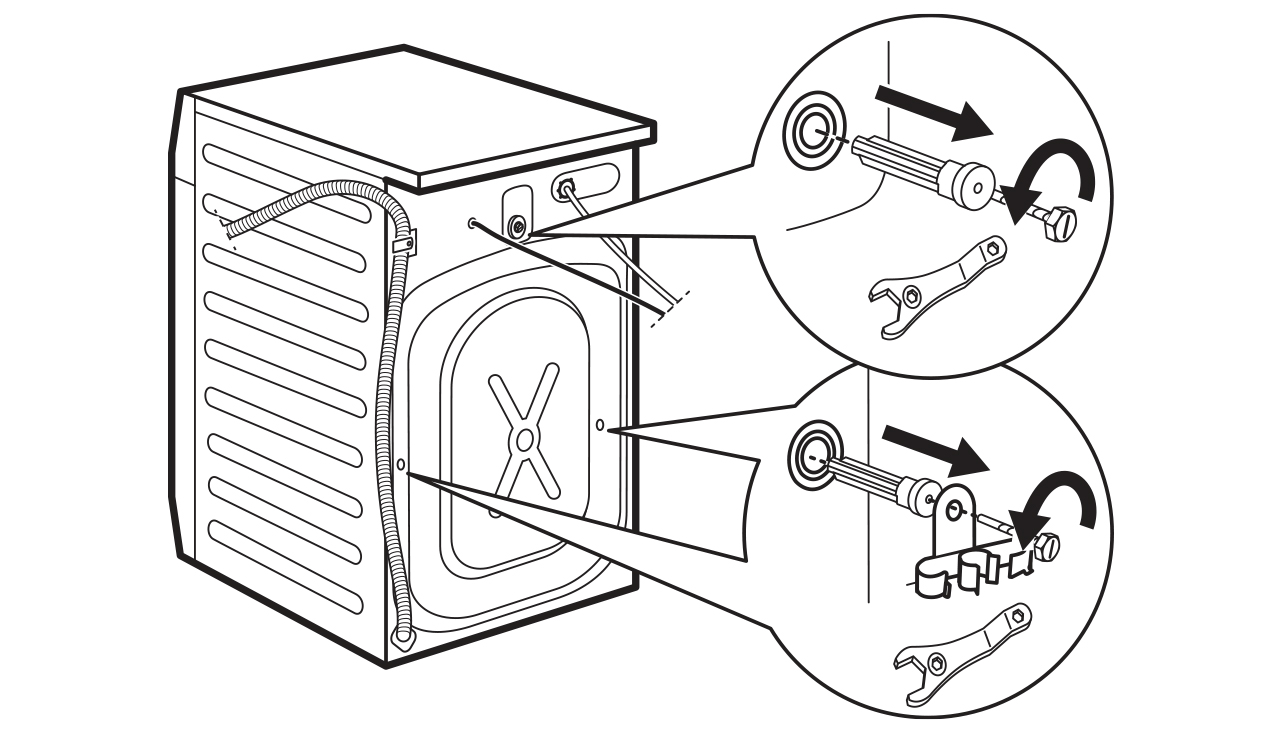
1. Verify that the transit bolts have been removed
If the appliance has recently been installed, ensure that all transport bolts have been removed from the rear panel.
Transit bolts secure the drum during transportation. If they remain fitted, the suspension system cannot operate correctly, which may prevent proper balancing and spinning.
Refer to the installation instructions in your user manual or installation guide.
Download the user manual.
Picture1. transit bolts removal
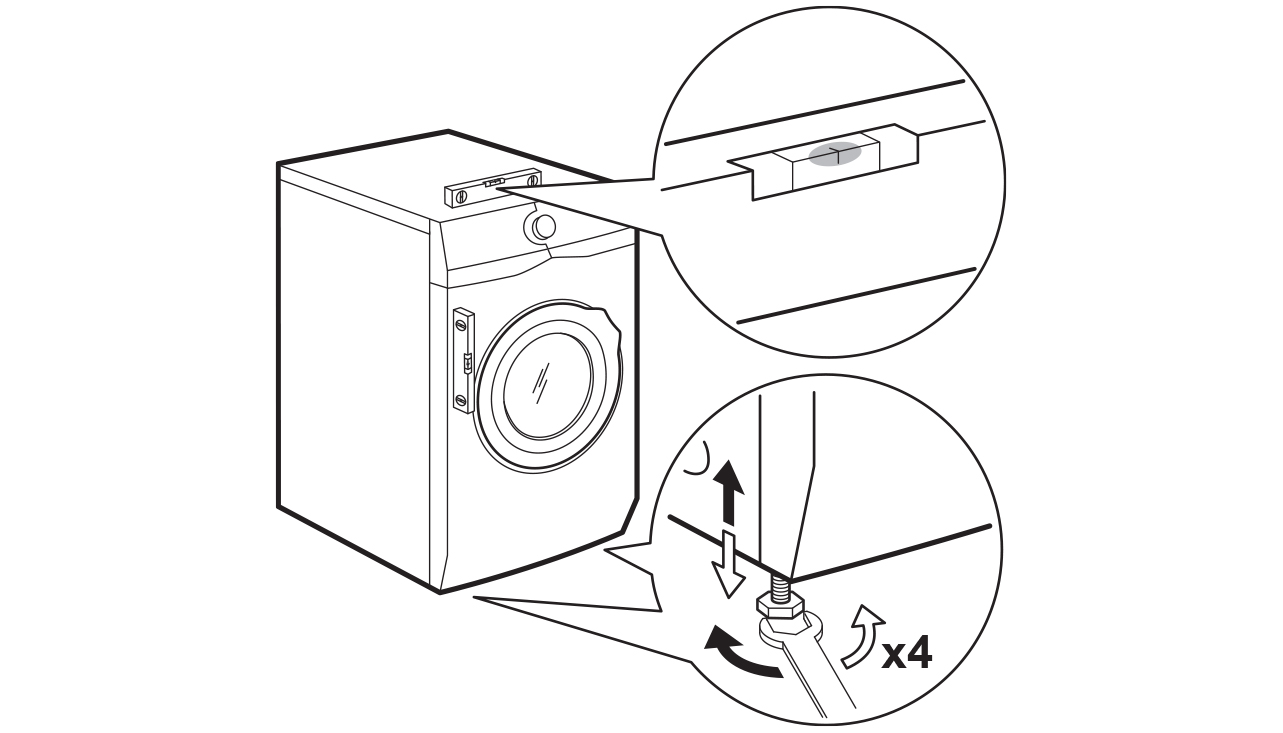
2. Check that the appliance is correctly levelled
Incorrect levelling can affect the machine's ability to detect and correct load imbalance.
- Use a spirit level to check the appliance from side to side and front to back.
- Adjust the feet as required using a suitable spanner.
A properly levelled washing machine is essential for stable high-speed spinning.
Picture 2. washing machine levelling
3. Ensure the appliance stands on a solid, stable surface
The washing machine must be installed on a firm and level floor.
Unstable floors, particularly suspended timber floors, may flex during operation. Excessive movement can interfere with the electronic balancing system and prevent the appliance from reaching spin speed.
4. Check the laundry load
AEG washing machines automatically assess load distribution before spinning.
Avoid overloading
An overloaded drum can prevent correct balancing and increase vibration levels.
Avoid very small loads
A single large item, such as a duvet cover or bathrobe, may collect on one side of the drum and create a significant imbalance.
If the load is very small:
- Open the door.
- Redistribute the laundry evenly.
- Select a spin programme and restart the cycle.
You can also test the appliance by running a spin-only programme with an empty drum.
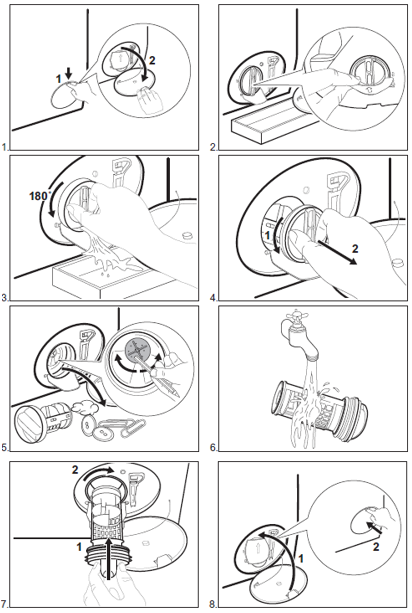
5. Inspect and clean the drain filter
Restricted drainage can prevent the appliance from initiating the spin cycle.
- Switch off and unplug the appliance.
- Open the filter access panel.
- Check the drain filter for lint, coins, buttons, or other foreign objects.
- Clean the filter thoroughly and reinstall it correctly.
Refer to the user manual for the detailed procedure specific to your model.
Picture 3. washing machine fluff filter cleaning
6. Check whether Rinse Hold is selected
When the Rinse Hold option is activated:
- The final spin cycle is intentionally skipped
- The last rinse water remains inside the drum
- The programme finishes without draining completely
- Laundry may appear wetter than normal
To complete the cycle, select a drain or spin programme.
Important
- Always disconnect the appliance from the power supply before performing maintenance.
- Do not force the appliance to operate if excessive vibration, unusual noises, or repeated fault codes occur.
- Repeated imbalance events can indicate installation, load distribution, or component-related issues.
- Follow the loading recommendations provided in the user manual for optimal spin performance.
When Is It a Genuine Fault?
The issue may indicate a technical fault if:
- Error code EF5 appears repeatedly despite correct loading
- The drain filter and drainage system are clear
- The appliance is correctly levelled and installed
- The spin cycle fails with both empty and normally loaded drums
- Unusual mechanical noises occur during drum rotation
In these cases, there may be a fault with the motor, tachometer, control electronics, suspension system, drainage components, or another internal component.
Still need help? Get expert support
If the issue continues, a professional technician can help diagnose and fix the problem.
No matter if your appliance is in warranty, out of warranty, or covered by an appliance protection plan - we’ll guide you to the right service.
Cause
AEG washing machines include sophisticated load-balancing technology designed to protect the appliance during high-speed spinning. When the system detects conditions that could result in excessive vibration or mechanical stress, the spin cycle may be reduced or cancelled.
The most common causes are:
- Load imbalance caused by unevenly distributed laundry.
- Rinse Hold selected, preventing the final spin cycle.
- Improper levelling, affecting stability and balance detection.
- Unstable flooring, preventing the appliance from achieving correct balance.
- Blocked drain filter, restricting water evacuation and preventing spinning.
- Installation issues, such as transit bolts remaining fitted after installation.
- Component faults, including drainage, motor, suspension, or electronic control failures.
FAQ
Why is my AEG washing machine not spinning?
The most common causes are load imbalance, a blocked drain filter, Rinse Hold being selected, or installation issues.
What does error code EF5 mean?
EF5 generally indicates that the appliance has detected a significant load imbalance during the spin phase.
Can a blocked drain filter stop spinning?
Yes. If water cannot drain correctly, the appliance may prevent the spin cycle from starting.
Why are my clothes still wet after the programme?
The machine may have reduced or cancelled the spin cycle due to imbalance, drainage issues, or selected programme options.
Can overloading prevent spinning?
Yes. Excessive loads can prevent correct balancing and stop the appliance from reaching spin speed.
Should the washing machine spin with an empty drum?
Yes. Testing a spin programme with an empty drum can help determine whether the issue is related to the laundry load or the appliance itself.
Was this article helpful?
Related Articles
- Washing Machine Not Working or Not Turning On – Troubleshooting Guide
- Why Do White Clothes Turn Grey After Washing? Causes & Easy Fixes
- Fabric conditioner does not dissolve in my washing machine
- Opening washing machine's door at the beginning of wash cycle
- How to clean the rubber seal on my AEG washing machine
- Washing machine displays padlock - AEG
- Washing Machine Not Draining Water – Error Code E20 or E21
- Washing machine does not take detergents / water remains in the fabric softener compartment
- How the Delay Start Function Works on Washing Machines
- Top loading washing machine does not have a filter/filter cannot be located
Spare parts & Accessories
Find original spare parts and accessories for your appliance in our webshop and have them delivered directly to your door.
Related Articles
- Washing Machine Not Working or Not Turning On – Troubleshooting Guide
- Why Do White Clothes Turn Grey After Washing? Causes & Easy Fixes
- Fabric conditioner does not dissolve in my washing machine
- Opening washing machine's door at the beginning of wash cycle
- How to clean the rubber seal on my AEG washing machine
- Washing machine displays padlock - AEG
- Washing Machine Not Draining Water – Error Code E20 or E21
- Washing machine does not take detergents / water remains in the fabric softener compartment
- How the Delay Start Function Works on Washing Machines
- Top loading washing machine does not have a filter/filter cannot be located