How to Defrost a Fridge, Freezer or Chest Freezer
Issue
- How often should I defrost my fridge or freezer
- Do No Frost appliances need defrosting?
- Defrosting a chest freezer safely
- How thick should ice be before defrosting
- How to remove ice from a freezer without damaging it
Applies to
- Freezer
- Fridge Freezer
Resolution
Defrosting Your Fridge or Fridge Freezer
If ice has built up inside your fridge or freezer, defrosting can help restore normal cooling performance and create more storage space. Follow the steps below to safely defrost your appliance.
How to Defrost a Fridge or Fridge Freezer
- Switch off the appliance and unplug it from the mains socket.
- Remove all food, shelves and drawers.
- If your appliance is fitted with a drip tray, make sure it is correctly positioned.
- Leave the door open and allow the ice to melt naturally.
- Wipe the interior with a soft, damp cloth.
- Clean the drain opening and refit the shelves and drawers.
- Close the door and plug the appliance back in.
- Switch the appliance on and wait until it reaches the selected temperature before returning food. This usually takes 4 to 6 hours.
Important: Never use knives, screwdrivers or other sharp objects to remove ice. This may damage the appliance or the cooling system.
Defrosting a Freezer
A freezer should be defrosted when the ice build-up reaches around 3 to 5 mm thick. Defrosting is easier when the freezer contains little or no food.
For best results, lower the temperature setting approximately 12 hours before defrosting. This helps keep frozen food colder for longer during the process.
To defrost the freezer:
- Switch off the freezer and unplug it from the mains socket.
- Remove all frozen food and store it in a cool place. Wrapping food in blankets or several layers of newspaper can help keep it frozen for longer.
- Leave the door open. If your freezer has a drain plug, remove it and collect the water in a suitable container.
- Place a bowl of warm (not boiling) water inside the freezer to help speed up defrosting.
- Remove loose pieces of ice as they detach naturally.
- Once all ice has melted, dry the interior thoroughly.
- Refit the drain plug (if fitted).
- Switch the freezer back on.
- Set the temperature to its coldest setting for at least three hours.
- Return the food to the freezer.
Defrosting a Chest Freezer
Follow these steps to safely defrost a chest freezer:
- Switch off the freezer and unplug it from the mains socket.
- Remove all food, baskets and accessories.
- Remove the drain plug if fitted. Refer to your user manual for model-specific instructions.
- Leave the lid open and allow the ice to melt naturally.
- Place towels inside and around the freezer to absorb the defrost water.
- Clean and dry the interior thoroughly.
- Refit any baskets and accessories.
- Close the lid and reconnect the freezer to the mains supply.
- Switch the freezer on and allow it to reach the selected temperature. This typically takes between 6 and 12 hours.
- Return the food to the freezer.
Frequently Asked Questions About Defrosting
How often should I defrost my fridge or freezer?
If your appliance does not have No Frost technology, it should generally be defrosted every 3 to 6 months, or whenever the ice layer reaches approximately 5 mm thick.
How long does defrosting take?
Defrosting usually takes between 4 and 6 hours, depending on the amount of ice build-up and the room temperature.
Do No Frost fridges and freezers need defrosting?
No Frost appliances automatically prevent ice build-up and do not normally require manual defrosting. Regular cleaning of the interior is still recommended.
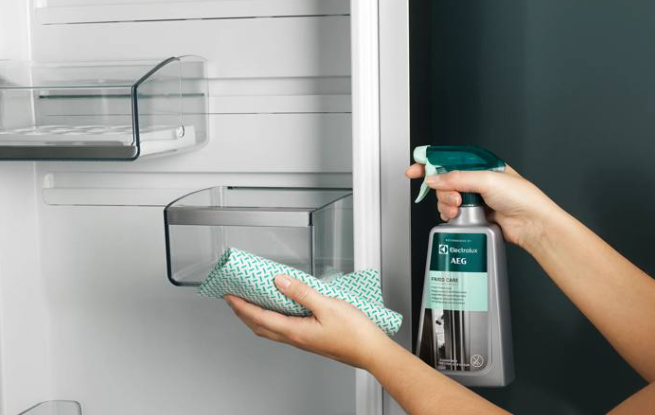
For best results, use original refrigerator cleaning products and accessories.
Important Safety Information
- Never use sharp objects to remove ice.
- Do not use heaters, hairdryers, steam cleaners or other devices to speed up defrosting unless specifically approved by the manufacturer.
- If frozen food becomes warm during defrosting, its storage life may be reduced.
- Do not touch frozen food with wet hands, as your skin may stick to cold surfaces.
Was this article helpful?
Related Articles
- Water Leaking from Fridge or Fridge Freezer – Causes & Solutions
- Food freezing In fridge
- Why is my fridge frosting up?
- Fridge freezer shows an alarm, red warning light, flashing triangle or beeps
- Strange noises from Fridge Freezer
- How to change the water filter in my fridge freezer? (located inside)
- Ventilation on Integrated and Freestanding Fridge Freezer
- Temperature in the fridge-freezer is too low
- What is the optimal temperature in the fridge / freezer?
- Fridge freezer shows code E01, E02, E03, E06, E07 on the display
Spare parts & Accessories
Find original spare parts and accessories for your appliance in our webshop and have them delivered directly to your door.
Related Articles
- Water Leaking from Fridge or Fridge Freezer – Causes & Solutions
- Food freezing In fridge
- Why is my fridge frosting up?
- Fridge freezer shows an alarm, red warning light, flashing triangle or beeps
- Strange noises from Fridge Freezer
- How to change the water filter in my fridge freezer? (located inside)
- Ventilation on Integrated and Freestanding Fridge Freezer
- Temperature in the fridge-freezer is too low
- What is the optimal temperature in the fridge / freezer?
- Fridge freezer shows code E01, E02, E03, E06, E07 on the display